42% of advertising med spas have run a campaign past six months. The winners optimize for retention, not one-time discounts.
That number comes from a live pull of 500 med spas across 10 cities, part of a national dataset covering 1,995 spas. It tells you something the discount-first crowd misses: the spas still running ads at the six-month mark are not chasing new-client CPAs. They are building systems. Memberships are how they close the loop.
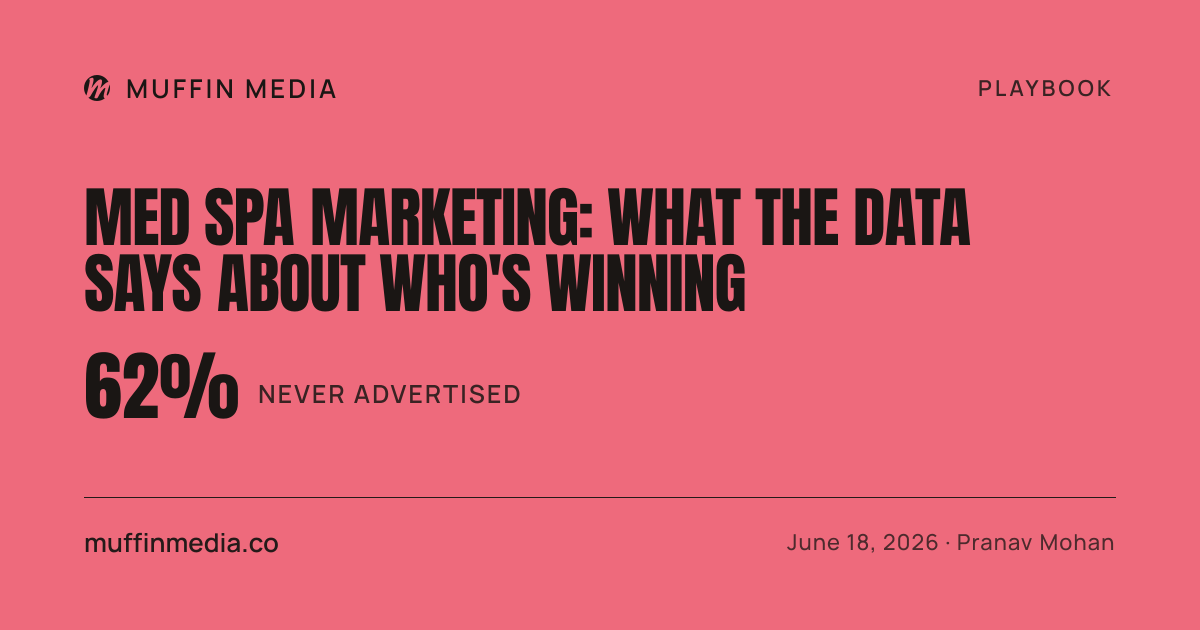
Most practices still advertise the wrong thing. They run a Botox special, fill a few slots, then go dark. Our data shows only 16.5% of med spas are advertising right now, though 38% have tried. The drop-off is not a budget problem. It is a model problem. When every campaign is a one-time acquisition push, the math never works. A membership program changes the denominator entirely.
This article walks through how to structure a med spa membership, how the market data shapes pricing and positioning, and how to advertise it in a way that keeps clients coming back rather than hunting for the next deal. Read the full Med Spa Advertising Report 2026 for the complete dataset behind these numbers.
Why do med spa memberships outperform one-off promotions?
Recurring revenue is predictable. A single Botox special fills the books for a Tuesday. A membership fills them for twelve months, compounds on renewal, and gives you a client whose lifetime value you can actually forecast.
The discount model is also competitively fragile. When every spa in your market is advertising a $9 lip flip or 20% off filler, price becomes the only differentiator. Memberships move the conversation to value, consistency, and results. Clients who pay monthly expect to use what they are paying for. Retention goes up because canceling a membership feels like a loss, where skipping a promo appointment feels like nothing.
Our data from Coral Gables shows what the early movers look like. Advertisers in that market are already pushing membership discounts and 5% cashback offers in their active ads. All of them are on Google. Zero are on Meta. That channel discipline matters: nationally, med spas run 4.8 times more ads on Google than Meta. Coral Gables advertisers already figured that out. The spas still running single-service discounts on Instagram are fighting a different, harder battle.
What should a med spa membership program actually include?
Keep it simple and tiered. Most successful programs run two or three levels, each anchored to a treatment category.
A base tier might cover one neurotoxin treatment per quarter with a 10-15% discount on add-ons. A mid tier adds a monthly skin treatment, a hydrafacial or peel, bundled at a rate below a la carte pricing. A premium tier combines injectables, energy-based treatments, and a fixed monthly credit that clients apply to anything in the menu.
Pricing should reflect your local cost basis and competitive set, but the structure is consistent: the membership price should land below what that client would pay booking the same services individually. The perceived value needs to be obvious. If a client has to do mental math to figure out whether the membership saves them money, you have already lost them.
Two operational details matter more than most practices realize. First, make cancellation clean. A hard cancel process generates chargebacks and reviews. A 30-day written notice policy is standard and defensible. Second, make sure your membership terms are reviewed against your state's prepaid contract rules before you launch. The med spa advertising compliance guide covers the regulatory angle in more detail.
How long should you run ads promoting a membership?
Longer than you think. The average longest-running med spa ad in our dataset runs 478 days. The longest single ad in the dataset ran 2,886 days. These are not accidents. Spas that let a performing ad run are the ones with stable acquisition costs.
42% of med spas that ever advertised are still running a campaign past the six-month mark. The ones who quit early never found out what the ad could do.
The 42% figure matters here. Most advertisers quit before the algorithm has enough data to optimize. Google's Performance Max and Meta's Advantage+ campaigns both need conversion volume to exit the learning phase. Membership campaigns, which often have longer consideration windows than a single-service promo, need even more runway. Cutting a campaign at six weeks because it did not hit cost-per-lead targets is the same mistake clinics make when they discount instead of build.
For a membership program specifically, plan a 90-day minimum test. Your goal in the first 30 days is audience calibration. Days 30 to 60 are optimization. Days 60 to 90 are when you actually see retention signals, form fills from people who have researched you, not just clicked impulsively on a deal.
For more on building campaigns that hold up over time, see med spa Google Ads that work.
Which ad formats work best for marketing a membership?
Google first. Nationally, med spas run 4.9 times more ads on Google than Meta across our 10-city pull. Search intent is higher. Someone typing "med spa membership near me" is much closer to buying than someone scrolling past a reel.
That said, Meta earns its place in the membership funnel at the middle and bottom stages. Our format data shows 41% of med spa Meta ads are video, 30% carousel, 29% image. For membership marketing, video wins because it can show the before-after arc across multiple visits, the thing a membership actually delivers. A 30-second video featuring a real client at month one versus month six tells a retention story no static ad can match.
Carousel is underused for membership positioning. You can run one card per tier, one card on the cancellation policy, one on the first-month offer. It is a natural format for explaining a structured program without cramming everything into a headline.
Search ads should lead with the recurring value, not the discount. "Botox included monthly" outperforms "save 20% on Botox" for membership intent queries because it signals a system, not a one-time deal.
Does local market competition change how you should price or advertise a membership?
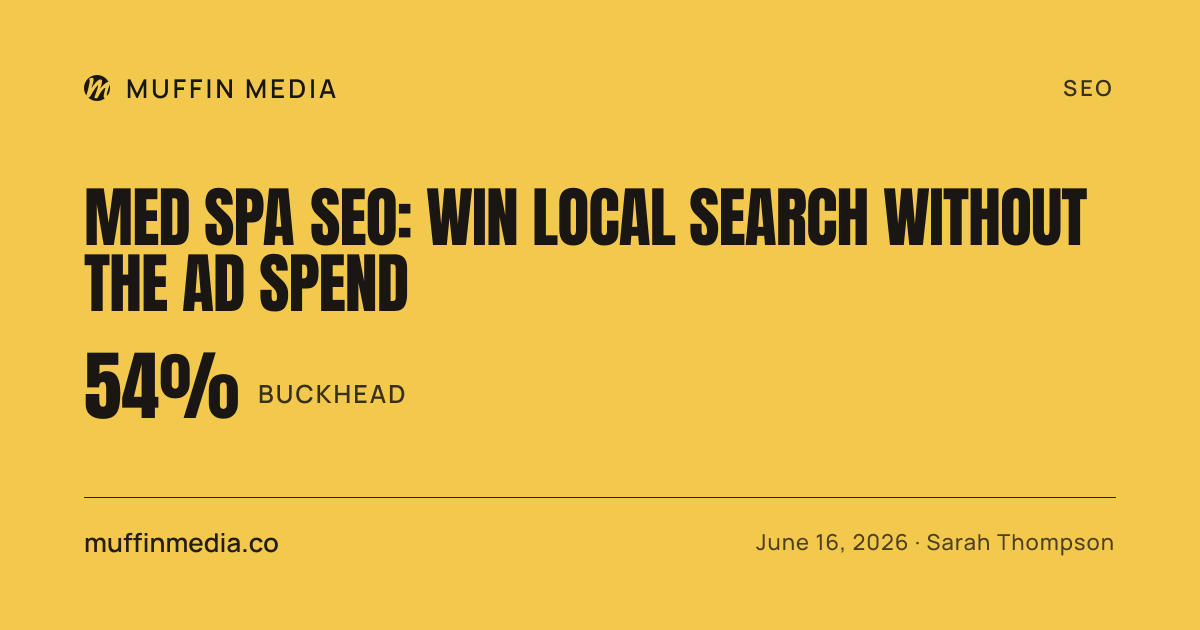
Yes, and the variance across markets is wide. Advertising rates in our 10-city pull range from 32% in Stamford to 54% in Buckhead. In a high-advertising market like Buckhead, where more than half of tracked spas are running active ads, your membership positioning needs to be sharper because clients have more options and more noise to filter through.
In a lower-competition market, a membership can be positioned more on convenience and consistency than on price. The client is not comparison shopping as aggressively. The pitch is about building a relationship with a practice, not about beating the spa down the street on price.
The 62% of med spas nationwide that have never run a single digital ad represent real whitespace. In most cities, you are not competing with a saturated market. You are competing with the inertia of spas that do not advertise at all. A well-structured membership with a 90-day Google campaign can establish category authority before anyone else shows up.
Local SEO for med spas pairs well with paid membership campaigns because it captures the clients who research before they book, the exact profile that converts to memberships at higher rates than impulse buyers.
How do you convert existing clients into membership subscribers?
Start with your appointment history. Any client who has visited three or more times in the past 12 months is a membership candidate. They already trust the practice. The membership is just formalizing a habit they have already formed.
Email is the highest-converting channel for this segment. The sequence is straightforward: an intro email explaining the program and the savings math, a follow-up with a specific call to action tied to their most-booked service, and a final note before the founding-member pricing window closes. Urgency needs to be real. A genuine price lock for clients who join before a launch date is defensible. A manufactured countdown timer is not.
For new clients, the conversion window is the second or third visit. Front desk staff should introduce the membership at checkout after the second appointment, not the first. At visit one, the client is still evaluating. At visit two or three, they have established a preference. That is when the membership conversation has the highest close rate.
For more on moving clients through the funnel after the first touch, the med spa lead generation guide covers nurture sequencing in detail.
This is not theory. We took a med spa from $61 to $19 cost per lead and 5.1x return on ad spend, adding roughly $33,000 in monthly revenue. See the full Focal Point Vitality case study.
Frequently asked questions
How much should a med spa membership cost per month?
There is no universal number, but the pricing logic is consistent. Add up the retail value of the services included in a given tier, then price the membership at 15 to 25% below that total. The discount needs to be visible and simple to calculate. Most practices land their base tier between $99 and $199 per month, with mid and premium tiers running $249 to $499. Test your pricing against your local market's average service ticket before you finalize it.
Do med spa memberships require special legal disclosures?
Yes. Most states treat prepaid medical service contracts as consumer agreements subject to specific disclosure requirements, including clear cancellation terms, refund policies, and service expiration rules. Requirements vary by state. Have your membership agreement reviewed by a healthcare attorney familiar with your state's consumer protection statutes before you launch. A compliance review is not optional if you are collecting recurring payments for medical services.
How long does it take to see ROI from a membership program?
Most practices see break-even on acquisition costs within 90 days for members retained past month three. The real returns show up at months six through twelve, when renewal rates compound and the cost to retain a member drops significantly below the cost to acquire a new client. Our data shows 42% of advertising med spas run campaigns past the six-month mark. The practices building membership programs are the ones with business models that make that long-game ad spend rational.
Free tool
See the live ad benchmark for your city
Written by Pranav Mohan, Muffin Media

Want this run on your brief?