With Google ads outrunning Meta 4.8 to 1, your website job is to convert people actively searching, not idly browsing.
That ratio comes from a live pull of 500 med spas across 10 cities: 167 Google advertisers versus 66 on Meta. In Coral Gables, 100% of advertising spas run Google ads and zero run Meta. The data is that clean. Which means the design brief for your website is equally clean: build for someone who clicked a Google ad or typed a treatment name into search. They are not browsing. They are deciding.
Most med spa websites are not built for that moment. They are built for brand impression, not conversion. The result is a site that looks good and does nothing, while the ad spend bleeds out on a landing page that never closes.
Why does Google traffic behave differently from social traffic?
Someone arriving from Google already wants the thing. They searched for it. The intent is explicit, the window is short, and the stakes for the page are high.
Meta traffic is warmer in a relationship sense but colder in terms of purchase readiness. That is why the 4.8x Google-to-Meta ad volume ratio matters so much for design decisions. If the majority of your paid traffic is coming from Google, your site needs to speak to someone who is ready to book, not someone who needs convincing they want the treatment at all.
The architecture follows from that. Google Ads that work for med spas tend to lead with a specific offer, a specific treatment, and a specific urgency signal. Your landing page needs to catch that same thread the moment the click lands. Drop it and the visitor leaves in under ten seconds.
What should a med spa landing page actually look like?
Mirror the ad. That is the whole principle.
The two most common offers in active med spa Google campaigns are 50% off laser hair removal and free consultation. If your ad makes either promise, the landing page headline should say the same thing, word for word. Not "Welcome to [Spa Name]." Not "We offer a full range of aesthetic services." The exact offer, above the fold, with a form or a phone number within scrolling distance.
This is where 87% of med spa advertisers lose the conversion. Our data shows that 87% of spas with active ad accounts are classified as beginner-maturity, and zero are advanced. Beginner advertisers write competent ads and then send traffic to a homepage. The homepage was designed for a first-time visitor who needs orientation. A paid click is not a first-time visitor who needs orientation. They are a buyer who needs confirmation.
Build separate landing pages for your major offers. One for laser hair removal. One for free consultations. One for Botox. Each page should have one goal and one call to action.
How many pages does a med spa site actually need?
Fewer than most agencies will tell you, and more targeted than most sites currently are.
The core architecture for a conversion-focused med spa website breaks down this way: a homepage that functions as a trust hub, individual service pages built for local SEO terms, dedicated landing pages for active ad campaigns, and a thin content layer of genuinely useful articles that capture long-tail search. That last category is where most of the lead generation work happens over time.
The mistake is building a 40-page site with no traffic hierarchy. Pages compete with each other for crawl attention and for visitor focus. A cleaner approach: build the ad-aligned landing pages first, because those generate revenue now. Build the SEO layer in parallel, because that generates leads in six months. Connect them through your homepage with clear navigation.
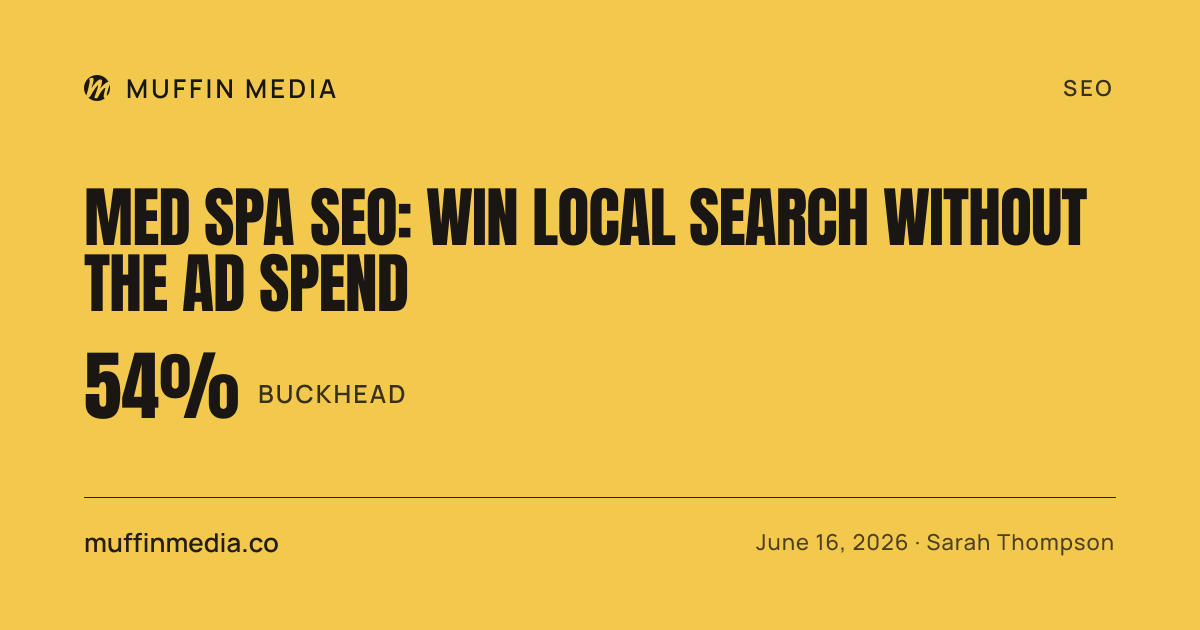
Service pages need to be city-specific if you are running campaigns in multiple markets. A Buckhead med spa and a Scottsdale med spa have different competitive environments. In Buckhead, 54% of med spas advertise actively. In Stamford, it is 32%. The density changes the bar for how aggressive your offers need to be and how much trust work the page needs to do before asking for a booking.
87% of med spa advertisers are beginners. Zero are advanced. The site that mirrors its ads wins by default.
What conversion elements belong above the fold?
The offer, a headline that matches the ad, a primary call to action, and at least one trust signal.
Trust signals in a med spa context mean provider credentials, before-and-after photography, or a recognizable brand association. They do not mean a generic five-star badge with no review count. Visitors have pattern-matched on fake social proof; it registers as noise. Specific numbers work: "1,200 laser treatments performed" is credible. "Award-winning team" is not.
The call to action should say what happens next. "Book a Free Consultation" is better than "Get Started" because it confirms the offer from the ad. "Claim Your 50% Off" is better than "Learn More" when the ad led with a discount. The form should have three fields maximum above the fold: name, phone, and treatment interest. Save the medical history for after the booking is confirmed.
Mobile layout is where most of these principles fall apart. The form that looks clean on desktop becomes a scroll-buried afterthought on a phone. Since the majority of Google search traffic on treatment-specific queries comes from mobile, the mobile layout is the primary layout. Design for that screen first and adapt to desktop, not the reverse.
How does site speed affect a med spa's conversion rate?
Directly and immediately.
A site that loads slowly on a 4G connection loses the visitor before they see the offer. This is not abstract. The people searching for med spa treatments on mobile are often doing it between appointments, in a parking lot, during a lunch break. They will not wait four seconds for a hero image to load.
The most common culprits in med spa site builds are uncompressed before-and-after photos, third-party booking widgets that add multiple JavaScript requests, and video autoplay in the hero section. Each one is fixable without changing the design intent. Compress the images, lazy-load below-the-fold assets, and replace the autoplay video with a static image on mobile.
Page speed also affects your Google Ads Quality Score, which affects cost per click. A faster landing page lowers your effective ad spend without changing your bids. That is a significant lever when you are competing in a market like Buckhead where more than half of local spas are actively running campaigns.
See the med spa marketing guide for a full technical checklist alongside the marketing strategy.
Should a med spa site include a blog or content section?
Yes, but only if the content is built around real search terms.
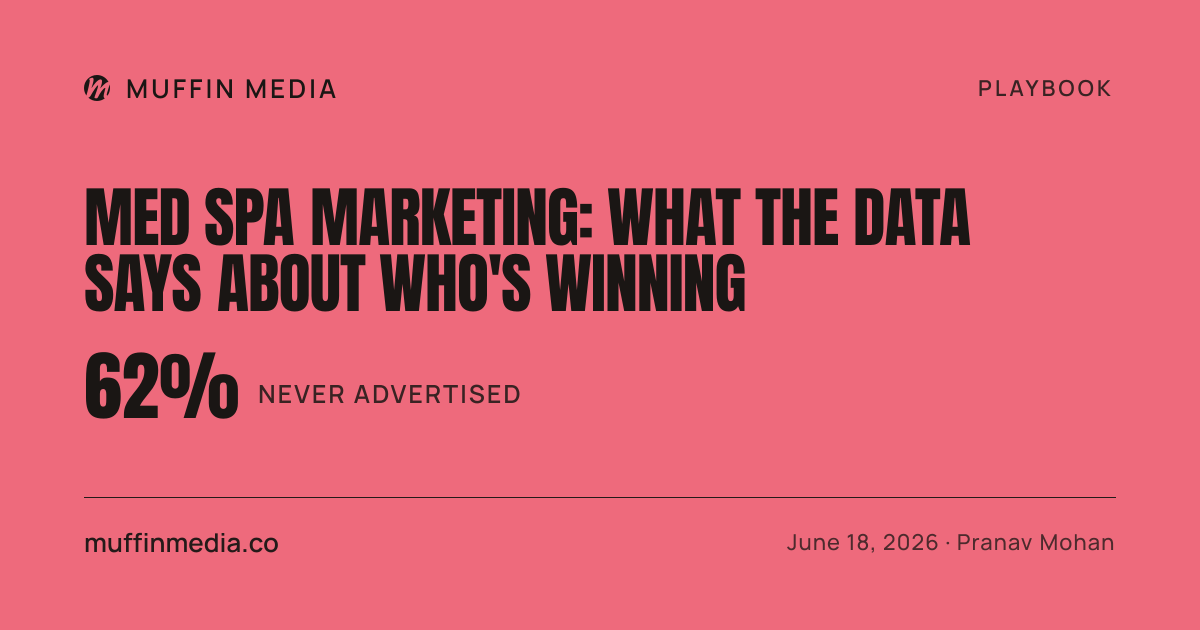
The 62% of med spas that have never run a digital ad are the opportunity here. Most of them have no content strategy either. A site with ten well-targeted articles on treatment-specific queries will outrank a competitor's homepage for long-tail searches within a few months. The compound effect of content-driven organic traffic is what makes med spa SEO worth the investment alongside paid search.
The content topics that actually drive bookings tend to be comparison queries ("laser hair removal vs waxing"), location queries ("med spa near [city]"), and pricing queries ("how much does Botox cost in [city]"). These are not glamorous topics. They are not brand-building content. They are conversion content disguised as information, and they are what search intent looks like in this category.
Do not publish generic wellness content. Content about stress management and self-care does not rank for med spa queries and does not convert into bookings. Every article should have a clear connection to a bookable service.
You can see the full underlying data from our 500-spa national pull in the 2026 med spa advertising research report.
What role does the site play in ad compliance?
A larger role than most operators realize.
Platforms have specific rules about what can appear on the landing page that receives ad traffic. Claims that cannot be substantiated, before-and-after photos that do not meet disclosure standards, and pricing language that contradicts the ad copy can each trigger ad account issues. The med spa advertising compliance guide covers the specifics, but the short version is this: your landing page is reviewed when your ad is reviewed. Build it accordingly.
For spas running offers like 50% off laser hair removal, the terms of the offer need to be accessible on the landing page. Not buried. Not in a footer privacy policy. Accessible, ideally in close proximity to the offer itself. This protects the ad account and also builds trust with the visitor who wants to know if the discount is real before they fill out the form.
---
Frequently asked questions
How many landing pages does a med spa need for Google Ads?
One per major offer, at minimum. If you are running campaigns for laser hair removal, Botox, and free consultations simultaneously, each campaign should send traffic to a dedicated page that matches the ad headline and offer. Sending all paid traffic to a homepage is the single most common reason Google Ads campaigns underperform in this category, and the fix requires no additional ad spend.
What is the biggest design mistake med spa websites make?
Building for brand impression instead of conversion. A site that looks beautiful but buries the booking form, omits the offer from the ad, and loads slowly on mobile will consistently lose to a plainer site that is aligned to search intent. The data supports this: 87% of med spa advertisers are at beginner maturity, meaning most competitors have not made this connection yet. A site that closes that gap wins bookings by default.
How long does it take for a new med spa website to rank in Google search?
Organic ranking typically takes three to six months for local service queries and longer for competitive treatment terms, depending on your domain age and the existing content on the site. Paid search works immediately, which is why the right sequencing is to launch the ad-aligned landing pages first and build the organic content layer in parallel. The local SEO guide covers the technical and on-page factors that accelerate that timeline.
Free tool
See the live ad benchmark for your city
Written by Sarah Thompson, Muffin Media

Want this run on your brief?