Only 66 of 500 spas across 10 cities advertise on Meta. The lane is wide open, and video is how you win it.
That number comes from Muffin Media's live pull of 500 med spas across 10 major markets. Not a survey. Actual running ads, pulled directly from the ad libraries. While the industry argues about whether Facebook still works for aesthetics, 87% of the spas that do advertise are operating at beginner maturity, running static images and boosted posts with no real strategy. That creates a gap you can walk through.
The story gets more specific when you look at channel split. Nationally, med spas run 4.8x more ads on Google than Meta. Across the 10-city pull, that ratio holds at 4.9x: 167 Google advertisers versus 66 Meta advertisers. Google dominates because it is intent-based and easier to copy. But Meta is where attention is earned before someone even knows they want a Sculptra series, and almost no one in the med spa space is doing it well.
This article breaks down exactly what the data shows about Meta ad formats, the markets where Meta outperforms Google, and what a real video-first strategy looks like for a med spa in 2026. For the full channel picture, read the med spa marketing guide for 2026 and the complete advertising data report.
Is Facebook still worth it for med spas?
Yes, and the underuse is exactly why. Only 16.5% of med spas are running any digital ads right now. Of those, a fraction are on Meta. Nationally, only 142 active Meta advertisers exist across 1,995 spas in our dataset. That is 7.1% of all spas using Meta at all.
The practical implication: if you run even a modest video campaign on Meta in most markets, you are one of a handful of spas doing it. The social feeds of people who follow wellness accounts, browse aesthetics content, and watch lip filler transformations on Instagram are not crowded with local med spa ads. That is a positioning gift.
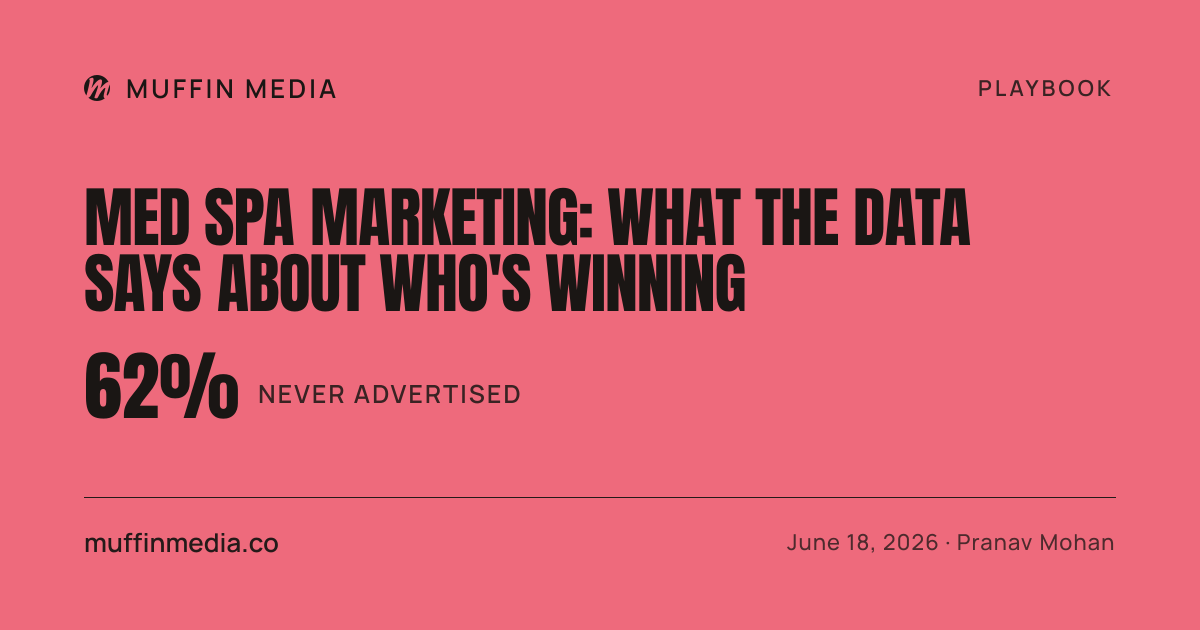
62% of med spas nationwide have never run a single digital ad. They rely on word of mouth, organic Instagram, and referrals. That works until a better-funded competitor comes in and owns the feed. Meta is where you plant the flag before that happens.
What ad formats work best for med spa Facebook ads?
Video wins, at 41% of active Meta ads in our 10-city sample, but the real answer is that format choice depends on what you are trying to do.
Across the 66 Meta advertisers we tracked, the format breakdown is: video 41%, carousel 30%, static image 29%. That spread tells a story. The spas running video are the ones willing to invest in content. The ones running carousel are testing multiple treatments or offers. The ones running static image are mostly boosting organic posts and calling it a campaign.
Video performs for two reasons specific to med spas. First, the product is visual and procedural. Watching a microneedling treatment, a filler correction, or a body contouring session builds trust faster than any headline. Second, Meta's algorithm rewards watch time, and a well-edited 30-second before/after or treatment walkthrough generates the kind of engagement that keeps your cost per result lower than cold static creative.
Carousel format earns its 30% share for spas that want to show a menu: Botox, filler, Morpheus8, and memberships in one ad unit. It works for existing audiences who already know the spa name and are comparing services.
Static image is the easiest to make and usually the weakest performer unless the creative is exceptional. Given that 87% of med spa advertisers are at beginner maturity with zero advanced accounts in the entire dataset, most static image ads are not exceptional.
The format mix is telling: the spas that treat Meta seriously lead with video. Everyone else boosts a photo and wonders why it didn't work.
See how Meta strategy compares to Google intent campaigns in the med spa Google ads breakdown.
Which markets give med spas the best Meta opportunity?
Newport Beach is the one market in our data where Meta actually beats Google, with 36 live Meta ads against 27 Google ads.
That is the only city across 10 markets where Meta flips the ratio. Newport Beach is an affluent coastal market where consumers are already highly engaged on Instagram and aesthetics content performs well organically. When the organic engagement is high, paid amplification on Meta converts more efficiently.
The inverse case is Coral Gables, where 100% of advertising spas are on Google and zero are running Meta. That is not because Meta doesn't work in Miami-area markets. It is because no one has tried it seriously. That is a competitive opening, not a signal to avoid the channel.
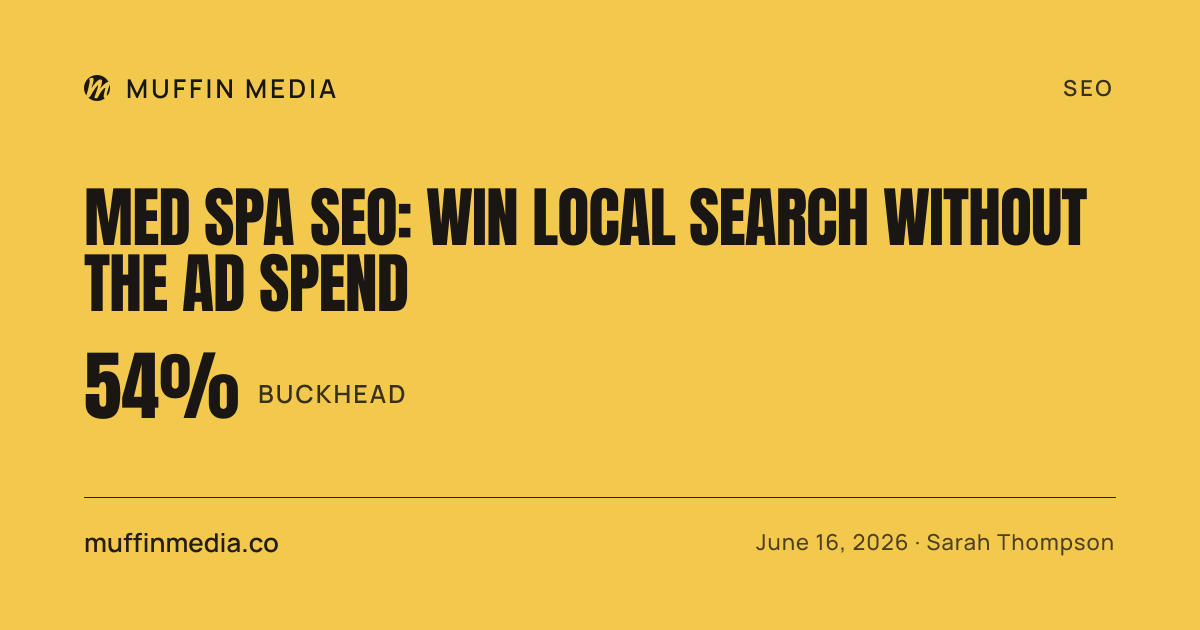
Buckhead has the highest advertising rate of any market we tracked at 54%, meaning more than half of spas there are running paid ads. Stamford sits at the bottom at 32%. High advertising density markets like Buckhead tend to be Google-heavy because the intent channel is easier to copy, which means Meta is more differentiated there, not less.
If you are in a market where Scottsdale or Buckhead competitors have saturated Google, the Meta lane is less crowded than you think. Most of the local competition is not there.
How long should a med spa Facebook ad run before you see results?
Long enough to build frequency with a cold audience, which is usually longer than most spa owners expect.
Our data shows that the average longest-running med spa ad across all channels runs 478 days. The maximum in the dataset is 2,886 days, nearly eight years. 42% of med spas that ever advertised have kept a campaign running for 180 days or more.
That longevity data is not about running the same creative for eight years. It is about advertisers who found something that worked and kept the campaign structure alive while rotating creative. The spas that turn campaigns on and off every 30 days based on monthly budget reviews almost never build the algorithmic momentum that makes Meta efficient.
On Meta specifically, the platform needs time to exit the learning phase and find your best converters. Industry benchmarks suggest budgeting for at least 50 conversion events per ad set before trusting the data. At typical med spa industry CPL ranges of $40 to $120 for aesthetic treatments (industry benchmark figures, not Muffin proprietary data), that means giving a campaign real budget before judging it.
For more on building a sustainable lead pipeline across channels, the med spa lead generation guide covers the full funnel.
What compliance rules apply to med spa Facebook ads?
Meta has specific restrictions on health and body-related advertising that catch med spas off guard.
Ads that reference body image in a way Meta deems potentially harmful get rejected. Before/after images are frequently disapproved under the Personal Attributes policy, which prohibits implying that a viewer has a flaw. The way around this is framing: instead of "fix your double chin," you use treatment-first language like "Kybella at [Spa Name], book a free consult."
Medical claim language is the other common rejection trigger. Phrases like "remove fat permanently" or "reverse aging" can get flagged. The fix is to use FDA-cleared treatment names (CoolSculpting, Botox, Morpheus8) and let the brand carry the claim, rather than making the claim yourself in ad copy.
Read the full med spa advertising compliance guide before launching. One rejected campaign that trains Meta's algorithm on disapproval events can affect account health for weeks.
How does Meta fit into a med spa's overall marketing mix?
Meta works best as the awareness and retargeting layer, not the primary lead-gen channel.
The channel split data makes this clear. Med spas run 4.8x more Google ads than Meta nationally because Google captures people who are already searching for a treatment. That is high-intent traffic, and it converts faster. Meta reaches people who are not searching yet but are buildable into future clients through repeated exposure to your brand and treatments.
The smart structure: run Google for active searchers, run Meta for awareness and retargeting people who visited your site or engaged with your Instagram. The two channels compound. A prospect who saw your Morpheus8 video on Instagram three times converts on Google at a higher rate than a cold Google visitor.
Instagram strategy for med spas covers the organic side of this, which feeds your Meta paid audiences with warm data.
For spas running memberships, Meta retargeting is also the best channel for re-engagement offers. Someone who bought a package six months ago and lapsed is better reached on Meta than on Google. The med spa memberships and retention guide covers how to build those audiences.
What budget should a med spa allocate to Facebook ads?
The honest answer is that our data covers ad activity, not ad spend, so we do not have proprietary budget figures. What follows is based on industry benchmarks.
Most med spa operators spending on Meta see meaningful results starting around $1,500 to $3,000 per month per market, based on typical CPM and CPL ranges in the aesthetics category. Below $1,000 per month, the volume is usually too thin to exit Meta's learning phase reliably.
The more important variable than total budget is structure. A $2,000 budget split across eight ad sets at beginner creative maturity will underperform a $2,000 budget in two focused ad sets with professional video creative. Our data shows 87% of med spa advertisers are at beginner maturity. Budget is not the constraint for most. Creative and structure are.
For a full breakdown of channel costs and where to allocate across Google and Meta, the med spa branding and ad costs guide is a useful reference.
Frequently asked questions
Do Facebook ads actually work for med spas?
Yes, and the data shows they are dramatically underused. Only 66 of 500 med spas across 10 cities run any Meta ads at all. Nationally, just 142 active Meta advertisers exist across 1,995 spas. Spas that run video-first campaigns in most markets face almost no local competition on the channel, which keeps costs lower and creative differentiation higher than on Google.
What type of content performs best in med spa Facebook ads?
Video accounts for 41% of active Meta ads in our 10-city sample, the largest format share. Treatment walkthroughs, before/after sequences, and practitioner-led explainers tend to drive strong engagement because the product is inherently visual. Carousel format works for multi-treatment menus. Static image performs weakest unless the creative quality is high, which it rarely is at the beginner maturity level where most med spa advertisers operate.
Should a med spa use Facebook ads or Google ads?
Both, structured as complementary layers. Google captures active searchers ready to book. Meta builds awareness before the search intent exists, and retargets site visitors and past clients. Med spas nationally run 4.8x more Google ads than Meta, which means Google is more competitive and Meta is more open. Newport Beach is the one market where Meta outperforms Google in raw advertiser count, 36 vs 27. For most markets, the answer is Google for conversion and Meta for reach and retargeting.
Free tool
See the live ad benchmark for your city
Written by Aditya Mohan, Muffin Media

Want this run on your brief?