Acquiring a client is the expensive part. Email is how you turn one visit into 478 days of revenue.
That number comes from our proprietary pull of 500 med spas across 10 cities: the average longest-running ad in any given spa's account has been live for 478 days. Some campaigns have run for 2,886 days. These aren't spas throwing money at new-client acquisition month after month. They're spas that figured out retention, and kept spending because it compounded.
Our 2026 Med Spa Advertising Report shows that 42% of med spas that have ever advertised keep at least one campaign running for 180 days or longer. That's not paid-media discipline alone. That's a backend that turns first-time visitors into members and rebook patients. Email is the backend.
The math is simple. A new client costs money to acquire, whether through Google Ads, Meta, or word of mouth. The industry benchmark for med spa cost-per-lead runs $30 to $120 depending on market and channel (industry estimate, not our data). A client who books once and never returns is an expensive transaction. A client who books six times per year on a membership is the business model. Email is what closes the gap between those two outcomes.
This article walks through how to build that email system, what the data says about where med spa marketing actually wins, and which automations matter most for a practice that wants retention to carry its growth.
Why does email outperform social media for med spa retention?
Email reaches people who already know you. That's the entire advantage, and it's a significant one.
Social ads, including the Meta formats our 10-city pull captured (41% video, 30% carousel, 29% static image), are built for new-client discovery. They interrupt strangers. Email reaches someone who has already paid you money, already experienced a result, and is already warm to the idea of coming back. The conversion economics are completely different.
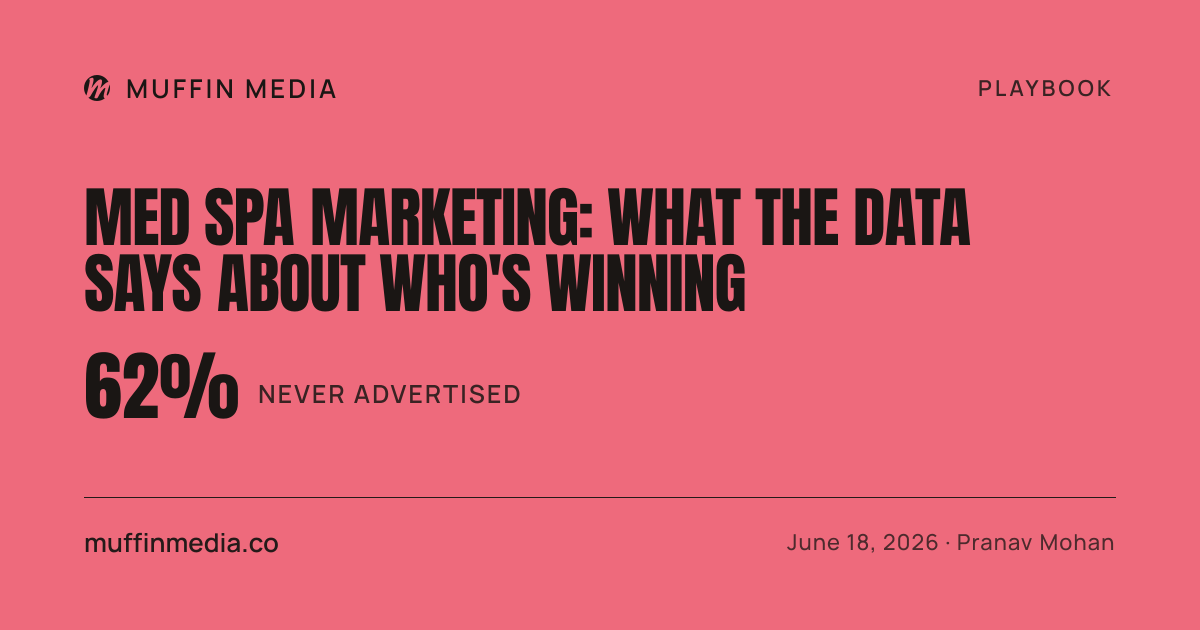
Our data shows that 62% of med spas nationwide have never run a single digital ad. Of the ones that have, only 16.5% are actively advertising right now, even though 38% have tried it at some point. The spas cycling in and out of ad spend often haven't built the retention infrastructure to make acquisition pay off. Email is that infrastructure.
The practical upshot: a well-run email list will generate rebooking revenue at a fraction of the cost of paid acquisition, because you're talking to people who already trust you. The longer that list grows, the more the unit economics of your marketing shift in your favor.
For a deeper look at how paid and organic channels work together, see our med spa marketing guide for 2026.
What emails should a med spa actually send?
The highest-performing med spa email programs share three categories: rebooking triggers, membership conversion sequences, and educational content that builds appointment intent.
Rebooking triggers are transactional. After a Botox appointment, the average treatment cycle is three to four months. An automated email at week ten or eleven, reminding the client that it's time to book, is not marketing. It's a service. Open rates on this type of email routinely run above 40% in healthcare-adjacent categories (industry benchmark). The message writes itself: "Your last appointment was [date]. Most clients rebook around [next date]. Here's a link to grab a slot."
Membership conversion emails are where the compounding really happens. Our pull of Coral Gables, where 100% of advertising spas are running Google campaigns and zero are running Meta, shows ads already pushing membership and cashback offers. The operators in high-competition markets understand that membership economics are different from single-visit economics. A member who pays $199 per month and books one service per month is worth more than a one-time client who booked a $250 service. Email is the right channel to make the membership pitch, because the pitch requires more than a 30-second ad: it requires trust, an explanation of value, and a low-friction call to action.
Educational content fills the gaps. Between appointment cycles, email gives you a channel to explain new treatments, share before-and-after content (within compliance guidelines, see med spa advertising compliance), and position your practice as a clinical authority. This is also where you can address price sensitivity directly by explaining why certain treatments cost what they do and what results clients should expect.
How do you build an email list without buying one?
Every touchpoint in your practice is a list-building opportunity.
The booking confirmation is obvious but often wasted. Most practices send a generic confirmation email and stop. That confirmation is an opportunity to set expectations for the visit, introduce your membership, and ask for permission to send educational content. A single sentence at the bottom ("We send occasional tips on getting the most from your treatments, reply YES to opt in") will convert a meaningful percentage of new clients.
Post-visit follow-up is the second major touchpoint. Within 24 hours of any appointment, an automated message checking in on the client's experience, asking for a review, and offering a rebooking link will generate both list growth and revenue. Clients who are happy and prompted immediately are far more likely to act than clients who are left to remember on their own.
In-practice capture matters too. A tablet at checkout, a QR code in the treatment room, a text-to-join flow connected to your front desk script: none of these require significant technology investment, and all of them compound over time as your list grows.
What you do not want to do is buy a list or import contacts who haven't explicitly opted in. Deliverability problems from spam complaints will undermine every other email you send. Build slow, build clean.
What automation sequences should a med spa prioritize first?
Start with the sequences tied directly to revenue, not the ones that feel creative.
The welcome sequence runs for new subscribers and new clients alike. It introduces your practice philosophy, your team, your most popular treatments, and your membership. Three to five emails over two weeks. The goal is to move someone from "I just booked once" to "I understand what this place does and I want to come back."
The rebooking sequence is the highest-ROI automation you will build. Triggered by appointment type and date, it sends a gentle reminder at the ideal rebooking interval for each service. A laser client gets a different interval than a filler client. This requires a CRM or booking system that can feed appointment data into your email platform, but most modern med spa software supports this.
The lapsed-client reactivation sequence targets anyone who hasn't booked in six months. This is a relatively short sequence (two or three emails) with a specific offer: a discount, a bonus add-on, or a membership trial. The goal is to reactivate before the client forgets you entirely. Our data showing 42% of advertisers maintain campaigns 180+ days suggests that the operators who stay in market longest understand lapsed-client economics. Email reactivation is cheaper than paid reacquisition for the same person.
The membership upsell sequence runs after a client's second or third visit. By that point, they've seen results, they trust the practice, and they're open to a longer-term commitment. A three-email sequence explaining membership benefits, addressing common objections (contracts, value, cancellation), and closing with a clear offer will convert a percentage of repeat clients into monthly recurring revenue. For more on membership economics, see our piece on med spa memberships and retention.
How should email fit into a broader paid media strategy?
Email and paid media are not competing channels. They're sequential.
The paid channel, whether Google search (our data shows med spas run 4.9 times more Google ads than Meta ads across 10 cities) or Meta social, handles the cold acquisition. It puts someone on your books for the first time. From that point forward, email is what drives the economics.
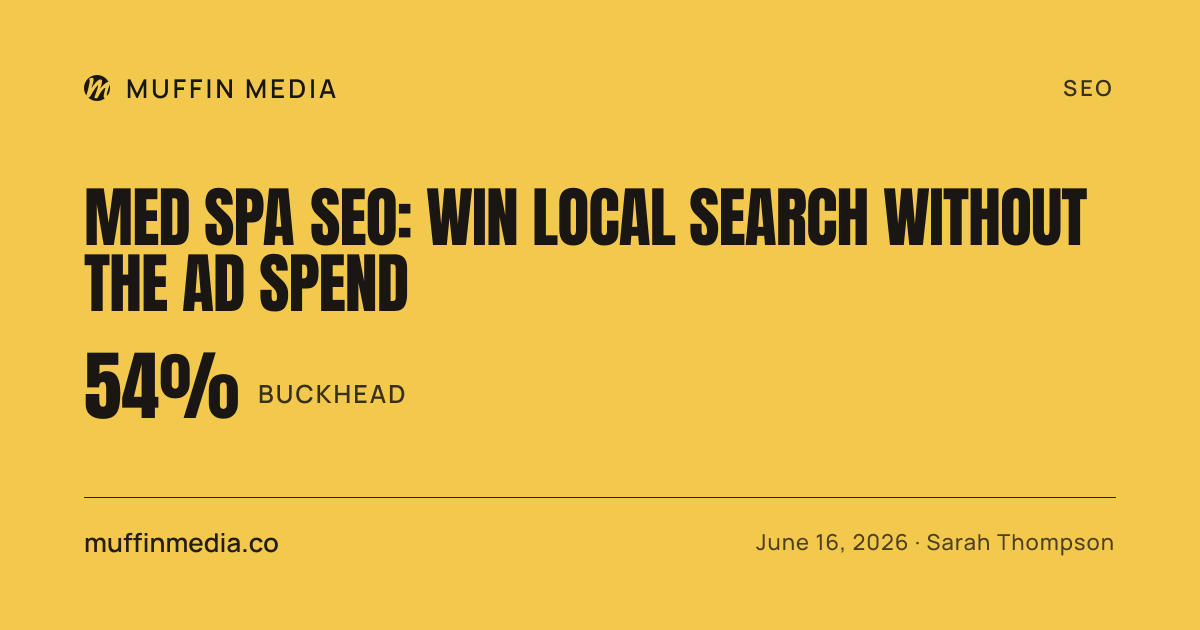
In markets like Buckhead, where our pull shows 54% of med spas are actively advertising (the highest rate in our 10-city dataset), competition for new-client acquisition is expensive. The practices winning in those markets are the ones keeping clients they've already paid to acquire. Email is how they do it.
In a market like Scottsdale, the dynamics are similar. Paid spend gets the client in the door. Email keeps them on the schedule.
The average longest-running med spa ad in our dataset has been live for 478 days. That kind of sustained spend only makes sense if the retention backend is working.
Our data shows 87% of med spas with active ad accounts are at beginner maturity, and 0% have reached advanced maturity. The maturity gap isn't just about ad sophistication. It's about whether the practice has built the systems, including email, to monetize what the ads produce. See med spa Google Ads and lead generation for more on closing that gap.
What tools do med spas typically use for email marketing?
The platform matters less than the data feeding it.
For small practices (under 500 active clients), Mailchimp, Klaviyo, or ActiveCampaign all handle the basics. Klaviyo is worth the extra cost if you're doing serious segmentation by treatment type or membership status.
For larger practices or groups, you'll want an integration between your booking system (Jane App, Mindbody, Boulevard, Vagaro) and your email platform. The goal is to have appointment data driving your automations, not manual tagging by a front desk team.
The email platform is a commodity. The list hygiene, the segmentation logic, and the sequence design are where the work actually lives. A well-segmented list of 800 active clients will outperform a poorly segmented list of 5,000 cold contacts every time.
For website conversion context that feeds your email list, see med spa website conversion.
Frequently asked questions
How often should a med spa send marketing emails?
Two to four emails per month is the right range for most practices. More than that, and unsubscribes climb. Less than that, and the practice becomes invisible between appointments. The cadence matters less than the relevance: a rebooking reminder at week eleven is welcome, a generic "check out our services" email is not. Segment by appointment history and send emails that reflect what each client has actually done at your practice.
What email metrics should a med spa track?
Open rate and click rate are table stakes. The metrics that actually tell you whether email is working are appointment-attributed revenue (how many bookings came from an email in the prior 48 hours), membership conversion rate from upsell sequences, and lapsed-client reactivation rate. Most booking systems can tag appointments by source if you use unique booking links in your emails. Set that up before you start optimizing subject lines.
Is email marketing compliant for med spas?
Yes, provided you follow CAN-SPAM and, where applicable, HIPAA guidelines. For marketing emails to opted-in clients, the main requirements are a clear unsubscribe mechanism, accurate sender identification, and avoiding any claims that could be construed as medical advice without proper qualification. Treatment results should be framed carefully, and before-and-after content requires specific consent. For a full review of what you can and cannot say in med spa marketing materials, see our advertising compliance guide.
Free tool
See the live ad benchmark for your city
Written by Aditya Mohan, Muffin Media

Want this run on your brief?